Fear is not a blunt instrument. The most effective manipulators never use it that way.
Palpatine did not terrorize Anakin Skywalker into submission. He did something far more precise — he identified the exact fears already running in Anakin's nervous system, amplified them at surgical intervals, and then positioned himself as the only available resolution. That sequence is not fiction. It is the documented mechanism by which fear-based manipulation operates in every domain — from abusive relationships to political campaigns to boardroom power plays.
The Amygdala Hijack: When Threat Detection Overrides Thought
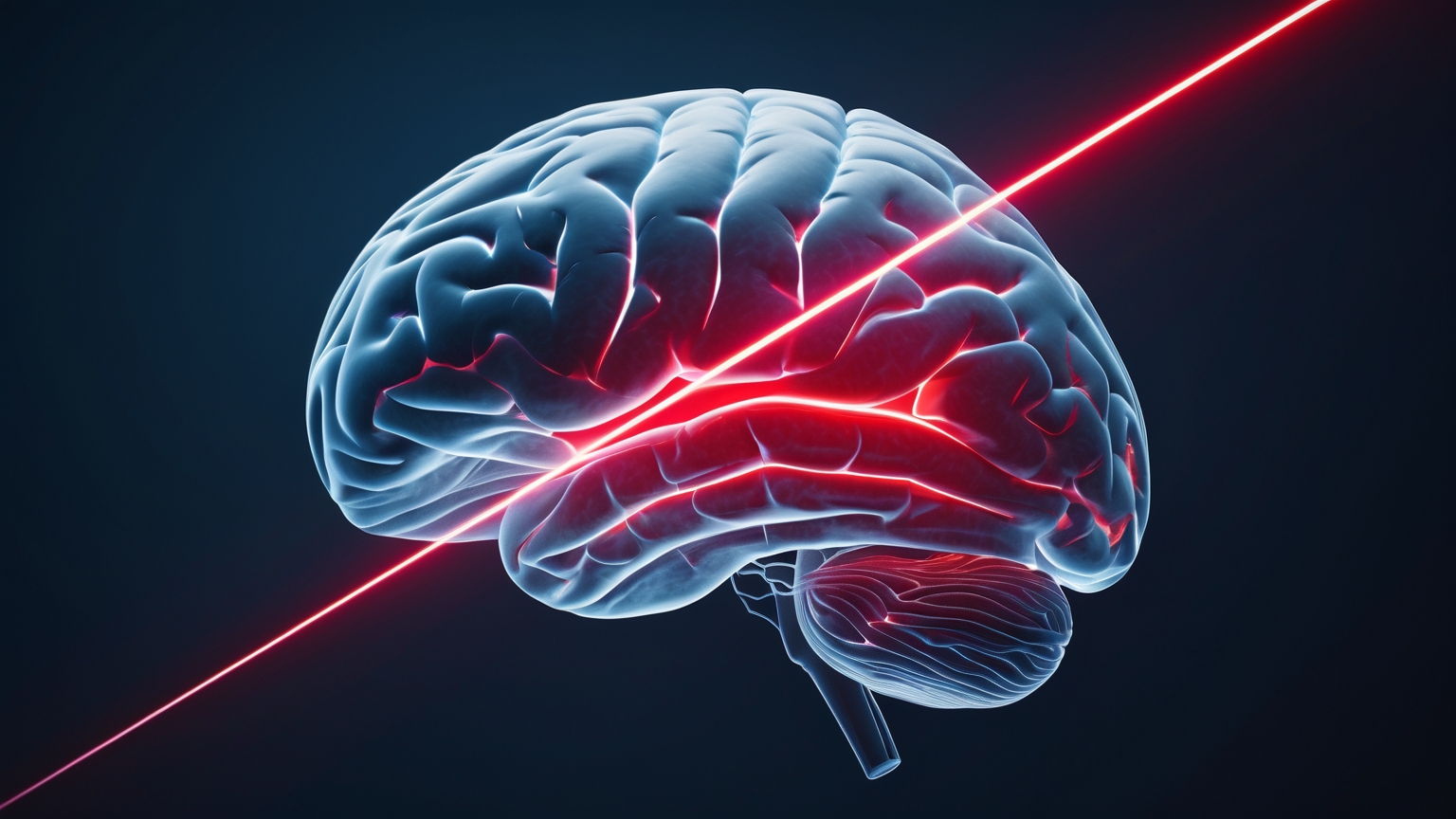
Daniel Goleman coined the term "amygdala hijack" to describe what happens when the brain's threat-detection center — the amygdala — fires so intensely that it bypasses the prefrontal cortex, the region responsible for rational evaluation, consequence modeling, and impulse control. This is not a metaphor. It is a measurable neurological event. Under functional MRI, a person in an acute fear state shows dramatically reduced prefrontal activity and heightened amygdala engagement.
The evolutionary logic is sound. When a predator is charging, you do not need to weigh options. You need to move. The amygdala delivers that speed by shutting down deliberation. The problem is that the amygdala cannot distinguish between a physical threat and a psychological one. A looming predator and the prospect of losing someone you love activate the same circuitry with the same downstream effect: the cognitive window narrows to a single exit.
This is the mechanism Palpatine exploited. He did not need Anakin to think clearly. He needed the opposite. Every conversation about Padme's death, every insinuation that the Jedi could not save her, every mention of powers the Jedi would never teach — these were not arguments. They were amygdala activations. Each one narrowed Anakin's cognitive window further, until only one option remained visible.
The person who controls what you fear controls where you look for safety.
Fear Conditioning: The Scars That Respond on Command
Joseph LeDoux's research at New York University established a finding that changes how fear should be understood: the amygdala learns fear associations faster than the cortex can evaluate them. A single traumatic event can create a fear circuit that fires for decades — triggered by stimuli the conscious mind may not even register.
Anakin's fear architecture was built long before Palpatine arrived. Slavery on Tatooine. The inability to protect his mother. Her death in his arms. These experiences did not produce abstract anxiety. They produced conditioned fear circuits — specific, durable, and activatable. Fear of loss. Fear of powerlessness. Fear of being too late.
Palpatine did not create these circuits. He mapped them. And then he learned exactly which stimuli would activate each one. A vision of Padme dying. A whispered suggestion that the Jedi were withholding knowledge. A carefully timed display of sympathy when the Jedi Council showed none.
This is how fear conditioning works in manipulation: the manipulator does not need to manufacture fear from scratch. Most targets arrive pre-loaded. Childhood trauma, past failures, unresolved grief — these are existing circuits waiting for the right input. The skilled manipulator's job is reconnaissance, not construction.
The Scarcity Collapse: When Loss Narrows the Field to One
Behavioral economics has documented the scarcity principle extensively: when a resource is perceived as disappearing, its subjective value spikes and the decision-making process around it degrades. Robert Cialdini's research showed that scarcity does not just increase desire — it compresses evaluation. Under perceived scarcity, people stop comparing options and start grabbing the nearest available one.
Now combine scarcity with active fear. Anakin was not calmly considering how to prevent Padme's death. He was experiencing amygdala-driven terror that she would die — a fear amplified by conditioned circuits from his mother's death. In that state, Palpatine introduced the dark side as a scarce resource: knowledge the Jedi refused to share, power available through only one path, a solution with a closing window.
Under fear, humans do not evaluate the best option. They seize the most available one. Palpatine made certain he was the most available option every single time. This is the same architecture behind fear-based marketing ("only 2 left"), political manipulation through threat narratives ("only we can protect you"), and controlling relationships ("you'll never find someone else"). The content varies. The mechanism is identical.
Any functioning decision framework has to account for this — because the moment scarcity and fear combine, the framework is the first thing the brain discards.
Learned Helplessness: The Setup Before the Kill
Martin Seligman's research on learned helplessness demonstrated that organisms exposed to repeated uncontrollable negative outcomes eventually stop attempting to escape — even when escape becomes available. The mechanism is not laziness or weakness. It is a neurological adaptation: the brain learns that effort does not correlate with outcome and stops investing in effortful responses.
Anakin's helplessness was layered. As a slave, he had no agency. When he finally gained freedom, he could not protect his mother. When he joined the Jedi Order, he was told his emotions — the very signals his nervous system used to navigate threat — were wrong, dangerous, to be suppressed. Every institution in his life taught him that his attempts at control would fail or be punished.
Palpatine offered the antidote to helplessness: the illusion of control. Not peace. Not wisdom. Control. The dark side was framed as raw, unlimited power — the one thing every helplessness circuit in Anakin's brain was starving for. This is why Anakin did not deliberate. The offer landed on neurological infrastructure that had been primed for years.
In real-world manipulation, this pattern is consistent. The target is first made to feel powerless through repeated experiences of failed agency — sometimes engineered, sometimes simply observed and exploited. Then the manipulator offers the only apparent path to restored control. The target does not question the offer because questioning requires prefrontal engagement, and the prefrontal cortex has already been offline for a long time.
The Fear Chain: A Cascade, Not a Choice
The sequence is not random. It follows a specific neurological cascade:
Fear of loss activates the amygdala and triggers threat-response mode. Fear of powerlessness — the recognition that you cannot prevent the loss — deepens the hijack and suppresses prefrontal evaluation further. Desperation for control emerges as the brain searches for any action that might restore agency. Acceptance of any means is the terminal state — the point where the cost of the solution stops being evaluated because the fear of the problem has consumed all available cognitive resources.
Palpatine walked Anakin through every stage of this chain. But the chain itself is universal. It operates in abusive partnerships where the threat of abandonment drives compliance. It operates in organizations where fear of job loss produces ethical compromise. It operates in strategic thinking failures where fear of competitive loss drives leaders into reckless acquisitions and destructive pivots.
The chain does not require a villain. It requires a fear, a sense of powerlessness, and an available exit that no one is evaluating critically.
The Protocol
Recognizing when your fear response is being weaponized is not intuition. It is a skill with a specific checklist.
- Name the fear in one sentence. Not the situation — the fear. "I'm afraid of losing this person." "I'm afraid of being seen as incompetent." "I'm afraid this opportunity won't come again." If you cannot name it precisely, the amygdala is running the show and you are reacting to a feeling, not a fact.
- Identify who benefits from your fear state. Fear makes you compliant, urgent, and uncritical. Ask: who gains from that version of you? If the person amplifying your fear is also offering the solution, that is not support — it is architecture.
- Force a second option into the frame. The narrowed cognitive window shows one exit. Manually generate a second, even if it feels less urgent. Write it down. The act of producing an alternative re-engages the prefrontal cortex and breaks the single-exit illusion.
- Apply a 48-hour rule on fear-driven decisions. If the decision feels like it cannot wait, that urgency itself is the signal. Genuine emergencies are rare. Manufactured urgency is a tool. Any decision that must be made right now, under emotional duress, with only one visible option — that is a decision being made for you, not by you.
- Audit your fear history. Map the fears being activated to their origins. If the current fear mirrors a childhood pattern, a past trauma, or a repeated loss — the reaction is conditioned, not proportional. The manipulation is exploiting old wiring, not present reality.
The paradox of fear-based manipulation is that it requires your participation to function. The amygdala fires automatically — that part is not optional. But the cascade from fear to compliance is not a single event. It is a sequence with gaps. And every gap is an intervention point.
Palpatine needed Anakin to stay in the fear state long enough to reach the terminal stage. The entire architecture depended on Anakin never pausing long enough for his prefrontal cortex to come back online.
The scalpel only cuts if you hold still.