Certainty feels like the end of a search. It is not. It is the point where the brain stops searching — whether or not the answer has been found.
"I am inevitable." Thanos did not say "I am powerful." He did not say "I am correct." He said inevitable — a word that does not describe confidence in an outcome. It describes the elimination of all alternative outcomes. That word is not a boast. It is a diagnostic marker. A mind that describes its own conclusions as inevitable has exited the space where reasoning occurs and entered a neurological state that merely feels like truth.
The Feeling of Knowing: A Neurological Sensation, Not an Epistemic Achievement
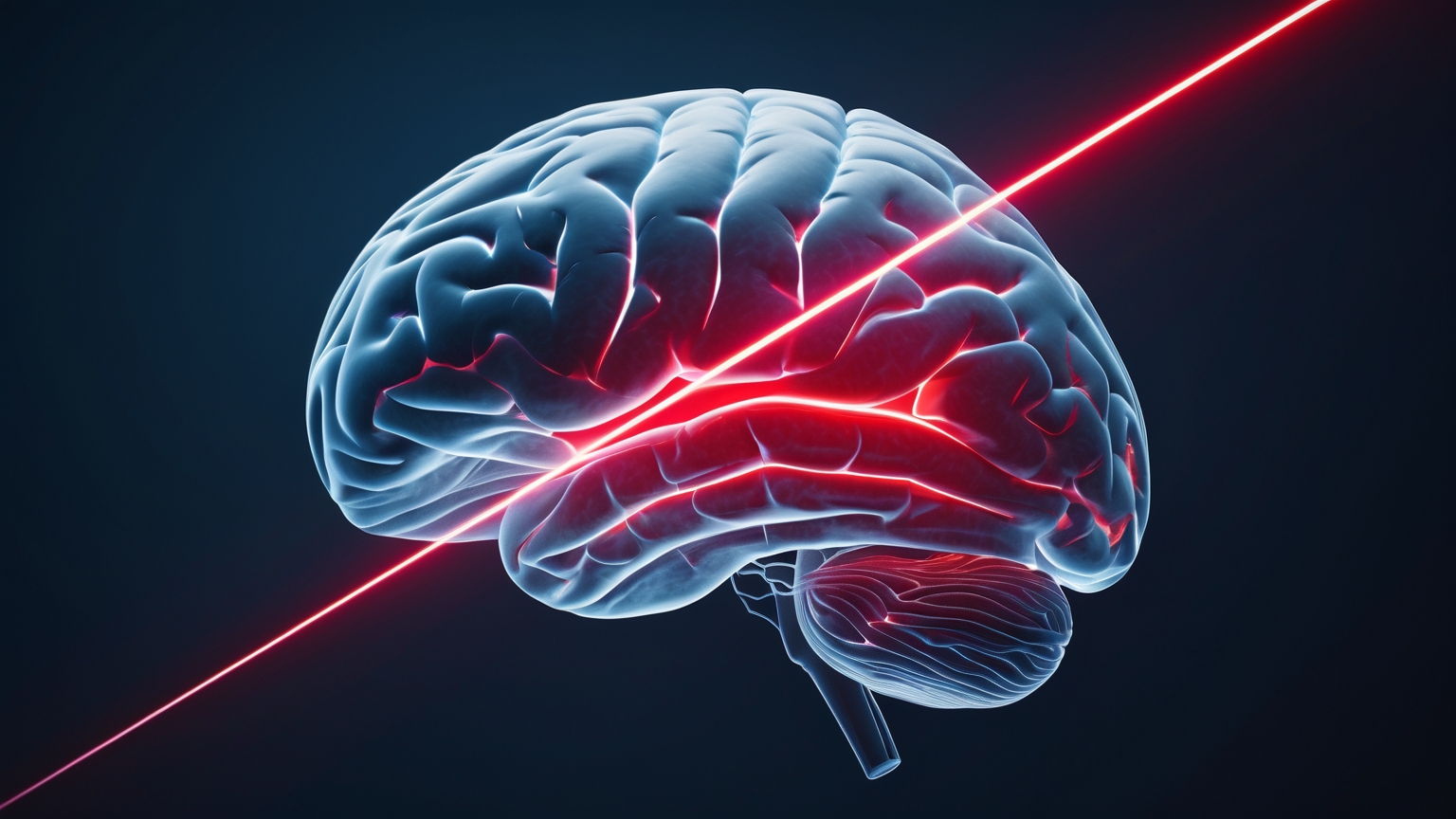
Robert Burton's research in On Being Certain identifies what may be the most consequential finding in modern epistemology: the feeling of knowing is generated by the brain independently of whether the thing known is actually true. Certainty is not a conclusion produced at the end of an evidence-evaluation process. It is a sensation — generated by reward circuits and the anterior cingulate cortex — that can attach itself to beliefs regardless of their accuracy.
This is not a subtle distinction. The subjective experience of being absolutely sure activates the same reward pathways as food, sex, and drugs. The brain does not distinguish between "I have correctly solved this problem" and "I have produced a feeling of resolution about this problem." Both feel identical from the inside.
Thanos possessed absolute certainty that halving all life was the only solution to resource scarcity. That certainty was not the product of exhaustive analysis. It was the product of a brain that had locked onto a single model and then rewarded itself chemically for maintaining it. Every subsequent observation was processed through the lens of a conclusion already reached — not tested against it.
Certainty is not what happens when you finish thinking. It is what happens when the brain decides thinking is no longer necessary.
Confirmation Bias: The Evidence Filter That Certainty Installs
Once the feeling of knowing locks in, the brain activates what Peter Wason first documented and Daniel Kahneman later popularized: confirmation bias — the systematic tendency to seek, interpret, and recall information that confirms existing beliefs while ignoring or discounting information that contradicts them.
Thanos ran this filter on every experience in his life. Titan fell because the population exceeded its resources. Conclusion: population must be culled. Every planet he subsequently "balanced" appeared to stabilize. Conclusion confirmed. The Avengers resisted his plan. Conclusion: they lacked his vision. Gamora argued against the method. Conclusion: she was emotionally compromised. The Infinity Stones themselves could have been used to create more resources rather than destroy half of all life. That possibility was never evaluated — because the conclusion had already been reached, and the brain had already stopped processing alternatives.
Kahneman's dual-process theory explains why this is invisible from the inside. Confirmation bias is a System 1 operation — fast, automatic, running below conscious awareness. The person experiencing it does not feel biased. They feel thorough. Thanos did not experience himself as someone ignoring evidence. He experienced himself as someone who had evaluated the evidence more completely than anyone else. That is the architecture of the trap: the bias is invisible to the person running it.
The Competence-Certainty Disconnect
The Dunning-Kruger effect is usually cited to describe incompetent people who overestimate their abilities. The more dangerous inversion gets far less attention: highly competent people whose expertise in one domain generates unwarranted certainty in adjacent domains.
Thanos was not wrong about resource scarcity as a concept. Titan did fall. Resource constraints are real. His identification of the problem demonstrated genuine analytical competence. The failure was in the certainty that competence in diagnosing a problem automatically produces competence in prescribing the solution. These are entirely separate cognitive operations — but the brain does not experience them as separate. The dopamine reward from correctly identifying a pattern creates a halo effect that extends to every conclusion downstream of that identification.
This is the mechanism behind founders who correctly identify a market need and then become impervious to feedback about their proposed solution. Behind analysts who accurately diagnose a competitive threat and then refuse to hear that their strategic response is flawed. Behind leaders who build genuine expertise in their domain and mistake that expertise for general wisdom. The diagnosis was right. The certainty it produced was not earned — it was transferred, from a domain where it was warranted to a domain where it was not.
The competence was genuine. The certainty it generated was pathological.
Belief Perseverance: When the Brain Defends Its Own Architecture
Lee Ross's research on belief perseverance demonstrates a finding that should unsettle anyone who believes they update their views based on evidence: once a belief system is established, presenting direct contradictory evidence not only fails to change the belief — it often strengthens it.
The mechanism is cognitive economy. Revising a deeply held belief is neurologically expensive. It requires dismantling existing neural pathways, rebuilding associative networks, and tolerating the acute discomfort of uncertainty while new models are constructed. The brain resists this process the way any system resists costly reorganization — by defending the existing structure and reinterpreting contradictory input as noise.
Thanos encountered multiple opportunities to revise his model. Gamora presented emotional and logical arguments against the culling. The existence of the Infinity Stones — capable of literally creating matter and energy — presented a solution that did not require death. The fact that populations on "balanced" planets could simply reproduce back to previous levels undermined the permanence of his method. None of these inputs were processed as evidence. They were processed as threats to an existing belief architecture — and the brain defended accordingly.
Any functioning decision framework must account for this mechanism. The question is never "am I certain?" — because certainty tells you nothing about accuracy. The question is "what would change my mind?" If the answer is "nothing," then the belief is not a conclusion. It is a neurological fortification.
The Dopamine Loop: When Being Right Becomes an Addiction
Each time Thanos culled a population and observed apparent stabilization, his brain's reward system fired. Dopamine release associated with "being right" reinforced the behavior-belief loop — not because the outcome was actually correct by any objective standard, but because the brain interpreted pattern-match confirmation as reward.
This is the identical mechanism behind gambling addiction. The wins are real. The model that explains them is not. But the neurochemistry does not care about the distinction. Intermittent reinforcement of a faulty model is more addictive than consistent reinforcement of a correct one — because the unpredictability heightens the dopamine response when confirmation does arrive.
Thanos was addicted to the feeling of being right. Each "successful" balancing was a neurochemical hit that deepened the groove of the existing belief. By the time he obtained the Infinity Stones, the dopamine loop had been running for decades. The neural pathway between "cull the population" and "reward" was a highway. The pathway between "consider alternatives" had atrophied from disuse.
"Inevitable" as Linguistic Closure: When the Reasoning Process Has Ended
In cult psychology and the study of extremist ideology, deterministic language functions as a diagnostic marker. When an individual or group describes outcomes as "meant to be," "written," "destined," or "inevitable" — they are not expressing confidence. They are signaling that the reasoning process has terminated.
Robert Lifton's research on totalist environments identifies "sacred science" as a core feature of closed ideological systems — the elevation of a belief to a status where questioning it becomes heresy rather than inquiry. "I am inevitable" is sacred science compressed into three words. It is not a prediction. It is a declaration that the outcome has already been determined and resistance is not opposition but denial of reality.
This linguistic pattern appears in every domain where certainty has replaced evaluation. The founder who says "this is the future" has stopped processing market signals. The political leader who says "history is on our side" has stopped updating their model. The strategist who says "this is inevitable" has stopped doing competitive intelligence. In each case, the language marks the point where feedback was replaced by conviction — and conviction, once installed as identity, becomes structurally impossible to reverse from the inside.
Thanos did not say "I have calculated the highest-probability outcome." He said "I am inevitable." The first is a claim open to revision. The second is a declaration that revision is impossible. That linguistic shift is the most reliable signal that a mind has closed.
The Protocol
Certainty is the brain's most convincing counterfeit. Defending against it requires structural interventions — not willpower, not humility-as-aspiration, but actual mechanisms that interrupt the loop before it seals.
-
Maintain a falsification log. For every major belief or strategic position, write down — in advance — what specific evidence would cause you to abandon or revise it. If you cannot articulate what would change your mind, the position is not a conclusion. It is a neurological lock. Review the log quarterly. If the falsification criteria have been met and the belief persists unchanged, the belief is running on reward circuitry, not evidence.
-
Assign a designated dissenter to every critical decision. Not devil's advocate as theater — a specific person whose explicit role is to build the strongest possible case against the proposed course of action. The dissenter must have actual authority to delay or block the decision. Red teams that can be overruled are decoration. Red teams with veto power are architecture.
-
Audit certainty as a warning signal, not a green light. When you feel most certain about a conclusion, treat that feeling the way a pilot treats an engine warning light — as a signal to run diagnostics, not as confirmation that everything is working. Ask: "What have I stopped considering since this feeling arrived?" The answer reveals what the certainty has filtered out.
-
Separate problem identification from solution certainty. Correctly diagnosing a problem does not validate any specific solution. Build explicit checkpoints between "this is the problem" and "this is what we should do about it." Require the same evidentiary rigor for the solution that was applied to the diagnosis. Thanos was right about the problem. The certainty he transferred to the solution killed trillions.
-
Watch for deterministic language in yourself and others. "This is inevitable." "There is no other way." "This was always going to happen." Each of these phrases marks a mind that has stopped processing. When you hear them, ask: "What would the world look like if this were wrong?" If the speaker cannot engage with that question — if they dismiss it, deflect it, or treat it as an insult — the reasoning process has ended and what remains is neurological conviction wearing the mask of logic.
The deepest paradox of certainty is that the people who possess the least of it are usually the ones closest to truth. Genuine expertise produces not confidence but calibration — an increasingly precise understanding of what is known, what is unknown, and where the boundary lies. The feeling of absolute certainty is not the destination of rigorous thought. It is the point where rigorous thought was abandoned and the reward system took over.
Thanos was not a catastrophe because he was evil. He was a catastrophe because he was certain.
The moment you cannot imagine being wrong is the moment you should be most afraid that you are.