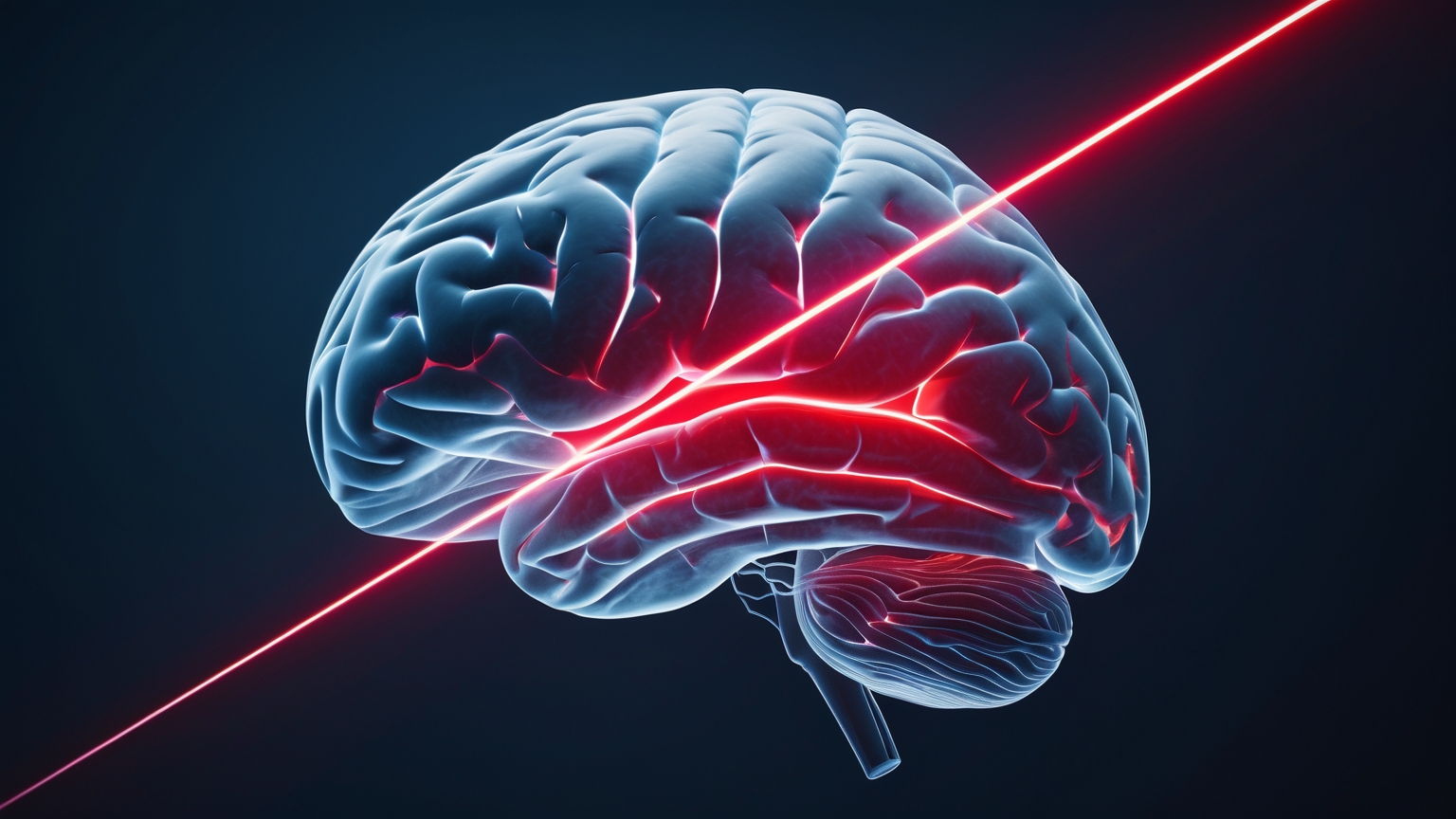
The same wavelength of light that increases your pain tolerance, boosts your immune system, and reverses age-related vision loss is also capable of triggering depression. The difference is not the light itself. The difference is the clock.
Your body runs two parallel light-processing systems. One builds you up. The other tears you down. And every time you check your phone at 1 AM, you are activating the wrong one.
The Biological Clock You Cannot Override
Deep in the back of your eyes sit a class of neurons most people have never heard of: intrinsically photosensitive melanopsin cells. They do not help you see. They do not process images. Their sole function is to measure the quantity and wavelength of light entering your eyes and translate that information into chemical instructions for the rest of your body.
When short-wavelength light — the ultraviolet-blue range that dominates sunlight — hits these cells during the day, the signal cascades through the brain and shuts down melatonin production from the pineal gland. This is not a side effect. This is the primary mechanism by which your body knows what time it is, what season it is, and what hormonal profile to run.
Melatonin is not just a sleep molecule. It regulates bone density. It modulates gonadal development. It shapes immune function. A study published in Cell Reports demonstrated that UVB light exposure to the skin triggered measurable increases in both testosterone and estrogen within days — while maintaining proper ratios in both men and women. Follicle maturation accelerated. Gonadal weight increased. The desire to mate intensified.
The mechanism is straightforward: light hits skin, skin activates a neuroendocrine cascade, hormones shift. Your body treats sunlight as a fertility signal. Every spring, this system ramps up. Every winter, it dials back. You are, at the hormonal level, a seasonal animal running on a light-based calendar.
The Pain Circuit Nobody Talks About
Beyond hormones, UVB light activates a second system that most people never connect to photobiology: endogenous opioid production.
A study published in Neuron mapped a visual circuit connecting those same melanopsin cells to the periaqueductal gray, a midbrain region dense with neurons that release beta-endorphin. When sufficient UVB light reaches the retina, this circuit fires. Pain tolerance increases. Not because the pain disappears, but because the brain's own painkiller system engages.
This is why pain tolerance varies across the year. Longer days do not just feel better — they chemically suppress pain perception. The body's tolerance for discomfort is not fixed. It is light-dependent.
Research from the University of São Paulo confirmed that even a single UVB exposure shifts the neuroendocrine balance: corticotropin-releasing hormone spikes, beta-endorphin floods the system, and the subjective experience of pain drops. The protocol is not complicated — 20 to 30 minutes of sunlight on exposed skin, two to three times per week. Even on overcast days, outdoor light delivers orders of magnitude more photon energy than any indoor source.
The Midnight Reversal
Here is where the same biology turns predatory.
Those melanopsin cells connect to a second structure called the perihabenular nucleus. This pathway bypasses the circadian clock entirely. It does not care about sleep. It cares about dopamine.
When UVB or bright artificial light activates this pathway between 10 PM and 4 AM, dopamine output drops. Serotonin production decreases. The endogenous opioid system that soothes you during the day goes quiet. The result is not grogginess. The result is depression.
This is not a metaphor. Activation of the perihabenular pathway at the wrong time of day directly suppresses the neurochemicals responsible for motivation, pleasure, and emotional regulation. Every bright screen, every overhead fluorescent, every bathroom light at 2 AM is feeding the exact circuit that dismantles your mood architecture from the inside.
The cruelty of this system is its precision. The same wavelengths that trigger testosterone production, immune deployment, and pain tolerance during daylight hours are the exact wavelengths that trigger depressive neurochemistry after dark. The molecule does not change. The receptor does not change. The clock changes, and with it, the entire downstream effect.
There is one exception. Red and near-infrared wavelengths — 670 to 790 nanometers — do not activate melanopsin cells or the perihabenular pathway. They penetrate tissue and interact directly with mitochondria. Research from University College London found that subjects over 40 who viewed 670-nanometer red light for three minutes daily showed a 22% improvement in visual acuity within weeks. Dim red light also maintained night-shift cognitive performance without suppressing melatonin or spiking cortisol — the late-night cortisol elevation that research consistently links to depressive and anxiety disorders.
The Protocol
- Get 10-20 minutes of direct sunlight before 10 AM. Not through a window. Outdoor light delivers 10-50x the photon intensity of indoor environments. This is the circadian reset signal — melatonin suppression, cortisol timing, and downstream hormone cascades all depend on it.
- Expose skin to midday UVB for 15-20 minutes, 3-4 days per week. The skin-brain-gonad axis requires direct photon contact. Clothing and sunscreen block the signal. Peak UVB penetration is between 10 AM and 2 PM. Adjust duration for latitude and skin type.
- Eliminate all blue-white light sources after 10 PM. Every bright photon after dark activates the perihabenular depression circuit. Use dim, warm-toned or red lighting in the final two hours before sleep. If you must work late, red-spectrum light maintains alertness without circadian disruption.
- Treat your light environment as a variable, not a backdrop. If you are optimizing nutrition, training, or productivity without controlling light inputs, you are adjusting downstream while the upstream signal runs corrupted. The InDecision Framework maps these hidden variables — light exposure is one of the oldest, and one of the least examined.
The light in your room right now is doing something to your brain. The only question is whether you chose it or it chose you.