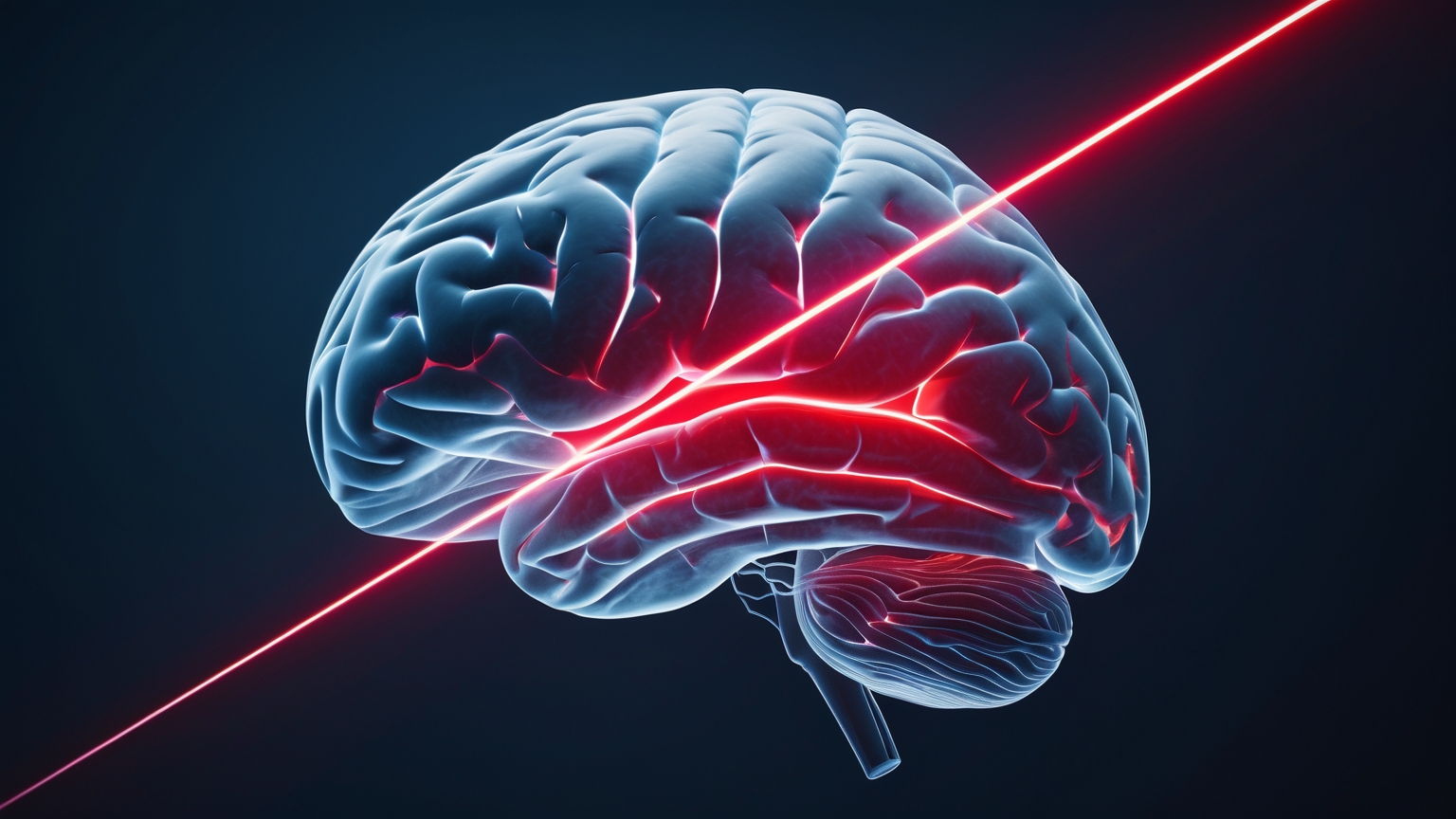
You wake up, reach for your phone, and within four minutes you're already anxious, irritated, or behind. You tell yourself it's the news. It's actually your brain — running a biological process that has nothing to do with what's on the screen.
The morning cognitive distortion window is real. And most people are walking straight into it every day.
The Cortisol Awakening Response
Within the first 30 to 45 minutes of waking, cortisol levels surge by 50 to 100 percent. This is known as the Cortisol Awakening Response — a well-documented neuroendocrine pattern that prepares the body for the demands of the day. It sharpens alertness and primes the stress-response system.
That sounds useful. It is — for physical preparation. It is not useful for nuanced decision-making.
Elevated cortisol narrows attention, amplifies threat salience, and pushes the brain toward binary thinking. Complexity looks overwhelming. Mild problems look serious. Neutral information gets read as negative. This is not a character trait or a mood. It's a biochemical condition with a predictable 45 to 90 minute window.
Confirmation Bias Runs Hotter Before the Prefrontal Cortex Is Online
The prefrontal cortex — the seat of rational evaluation, perspective-taking, and impulse regulation — is one of the last brain regions to reach full operational capacity after sleep. While it's still warming up, the default mode network runs the show.
The default mode network is the brain's resting-state system. It runs simulations, replays unresolved scenarios, and models social threat. In the absence of prefrontal oversight, those simulations run with less filtering. Research on confirmation bias has shown it operates with significantly higher intensity when cognitive resources are depleted — and the morning represents a reliable depletion window regardless of how well you slept.
You're more likely to read a neutral email as passive-aggressive. More likely to catastrophize a logistical problem. More likely to confirm your existing fears before you've evaluated any actual evidence.
What Checking Your Phone First Thing Actually Does
Your phone is an external cortisol delivery system. Notifications are engineered to trigger the same attention-capture mechanism as a threat signal. Each one — email, news, message, metric — is a micro-stressor arriving directly into a brain that is already primed to overweight threat.
The result is not that you become more informed. The result is that you load your threat-detection system with low-priority information and spend the next hour processing it through a neurochemically distorted lens. This is the hidden layer that most people never account for — and why Jeremy Knox writes about designing systems around cognitive reality instead of cognitive fantasy.
The decisions you make in that state — even small ones — set the emotional frame for the rest of the morning.
The Protocol
- Delay major decisions for 60 minutes after waking. Treat this window as a read-only period. Gather, do not act.
- Don't check your phone for the first 30 minutes. The world will not have changed irreparably in half an hour. Your brain's baseline will have.
- Use a first-thoughts journal for 5 minutes. Write whatever the brain is running. This externalizes the default mode network's simulations and weakens their grip on the day's frame.
- Eat before any high-stakes communication. Glucose depletion compounds cortisol's effect on decision quality. A small meal in the first hour is not a comfort habit — it's cognitive infrastructure.
The morning isn't when you think clearly. It's when you think fast, narrow, and hot. Design your routine around that fact instead of pretending it doesn't exist.
Your brain will tell you things in the first hour that aren't true. The protocol is not to argue with them. It's to wait them out.